Blinding light illuminates still water, cut stones, a gabled wall, and the recessed niche of a sacred fountain. Before we can visually locate ourselves (was that a statue of a saint? a crucifix?) we are plunged into the sounds and the greenness of the water. It’s a labile space. There’s a forest of string algae, musk grass, water-pimpernel, tadpoles, and slow worms.
Just as we gain our bearings, we’re pulled out of the water into the silent light, and then, plunged into another fountain, where the underwater camera reveals cracked granite floors, walls crusted with calcium carbonate (even the moss is gritty with it), weathered wood, and brackish water. The burbling sound quiets. An orange leaf drifts by. Instead of a forest, the scene is moon-like.
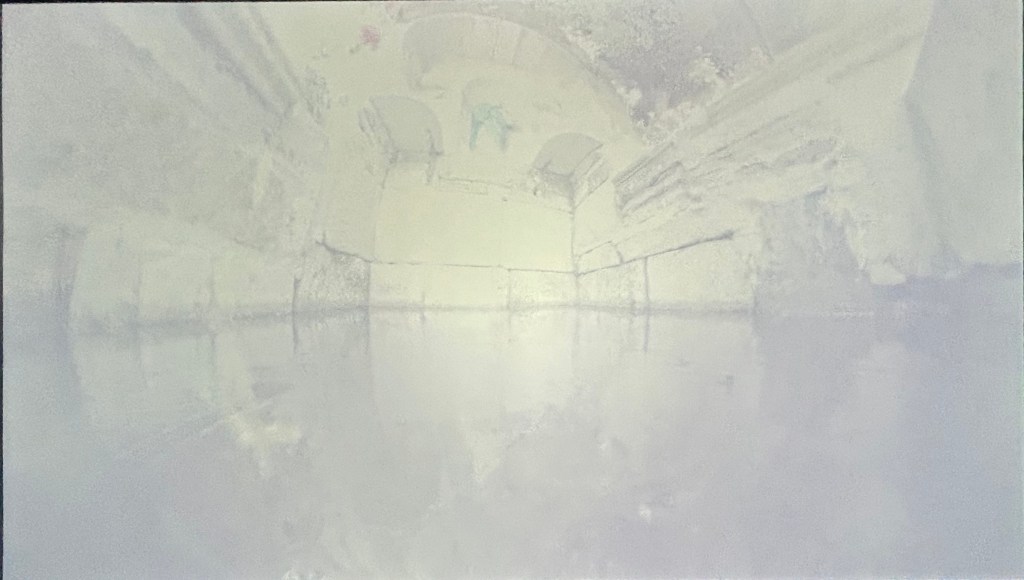
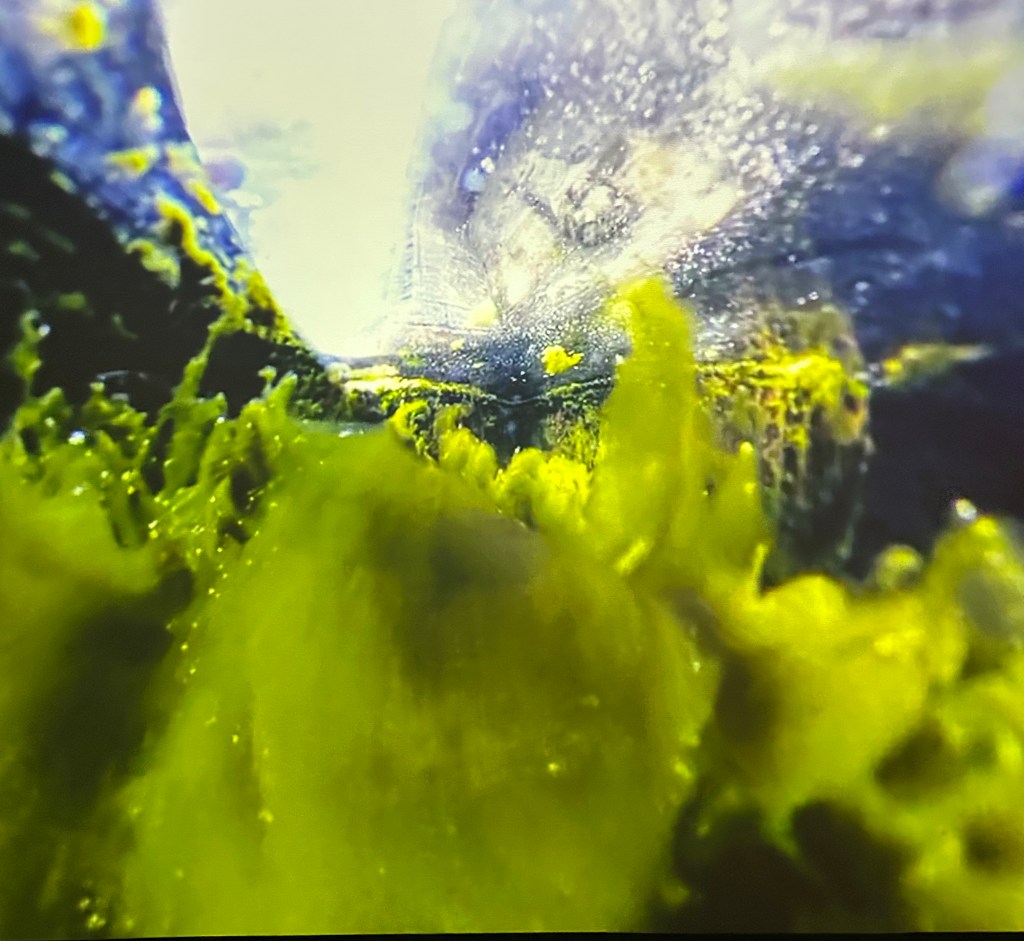
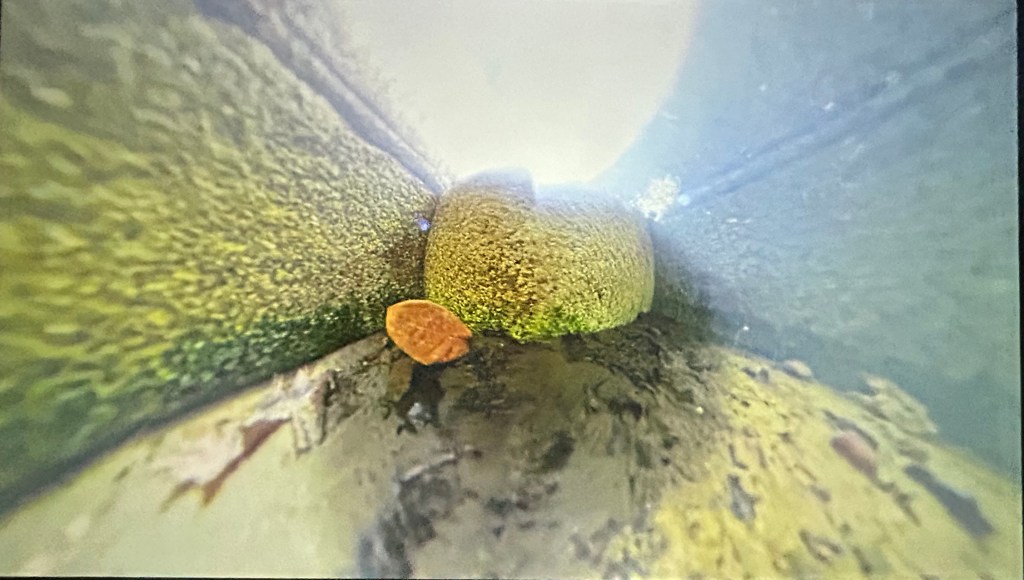
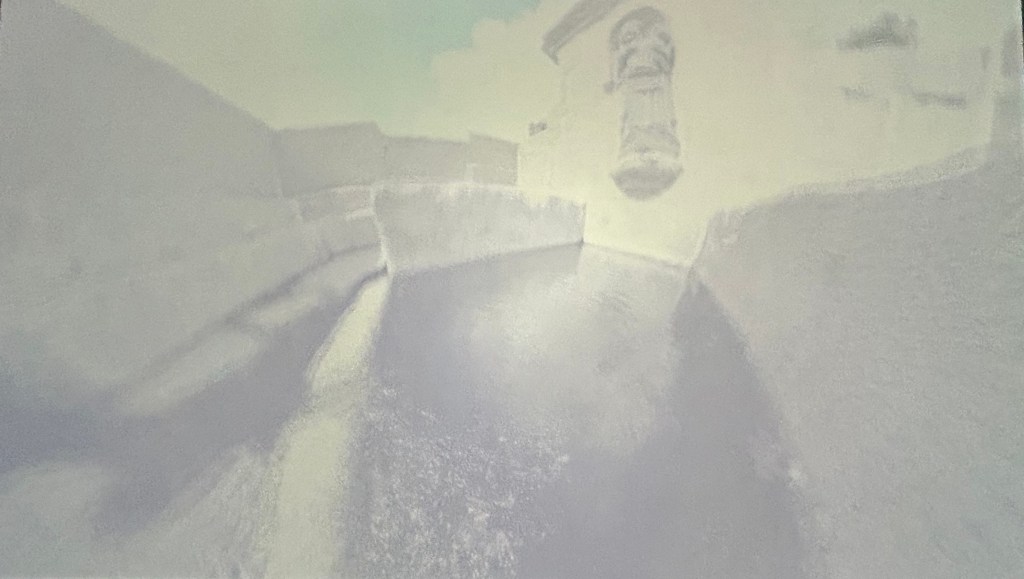
The acoustic and spatial disorientation surrounding the fountains in Marilène Oliver’s video 12 Healing Fountains for Women does important work. It supports visions of underwater forests and moons. It also signals the fountains as spaces that escape lived experience. Plants turn into kaleidoscopic globes, a wellspring in the floor is like a chartreuse-green planet, bubbles cascade upwards with a roar. Yet like the tornado of debris kicked up by a frog, it’s all real and gritty, not veering into dreams or nightmares, and that authenticity is the source of its power to entrance.
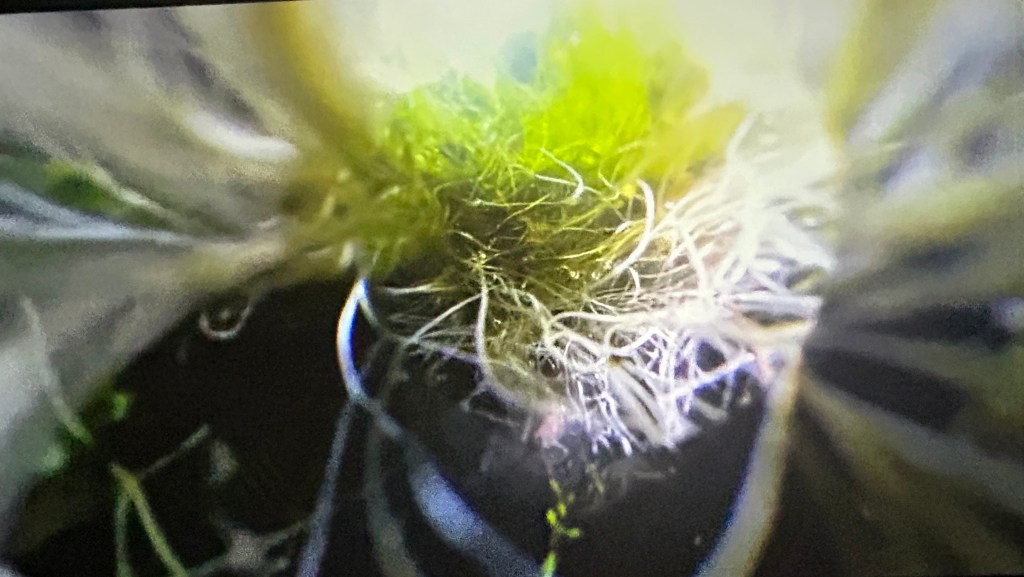
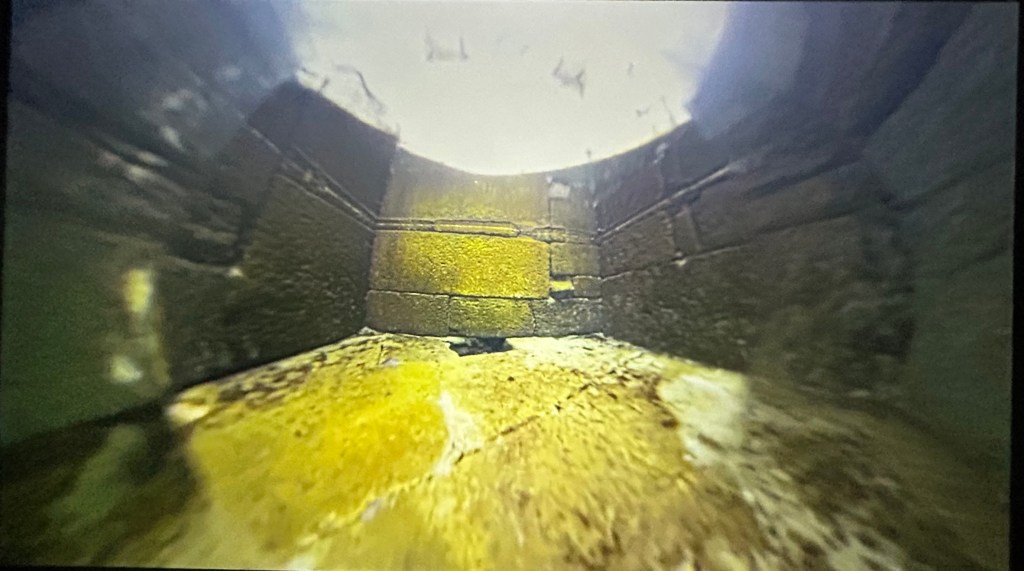
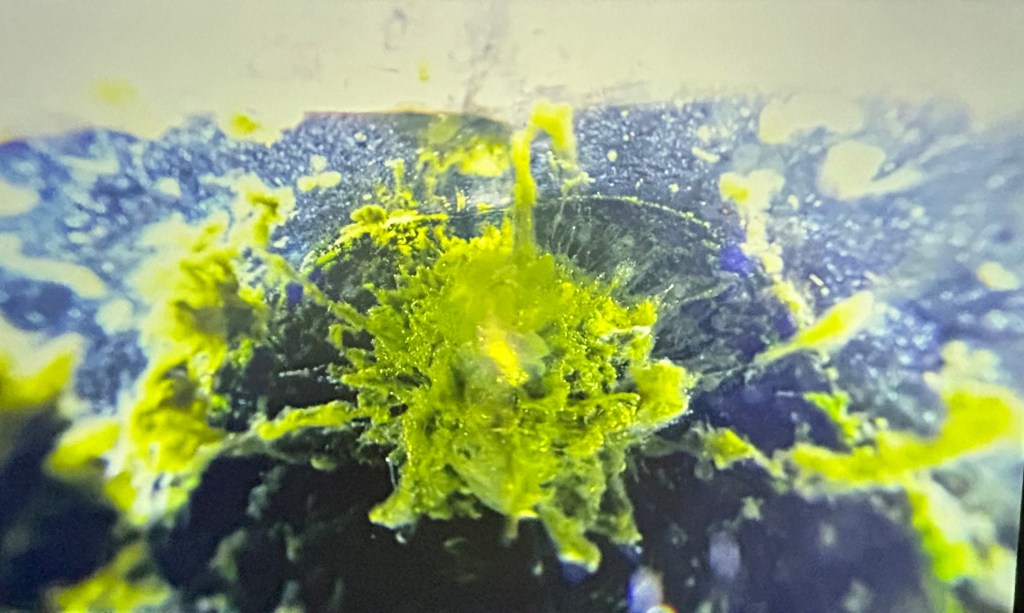
Always, the space where we begin each exploration, outside the water, is a threshold. In the establishing shots of fountain architecture, practically all we can see is light. When viewed from the camera’s eye beneath the water’s surface, that space above is an oculus. That is, we might imagine that we stand in the oculus (the eye of God, if we were in a cathedral), next to Marilène Oliver while she manipulates the camera. The two spaces (underwater and above it) are physically connected by the artist, of course, but only in the rare moments when her fingers and hands dip into the water, delicately adjusting the camera lens or cupping the spring water, does such tenuous connection become tangible, and the magic inside the fountain stream into the diffused light above.
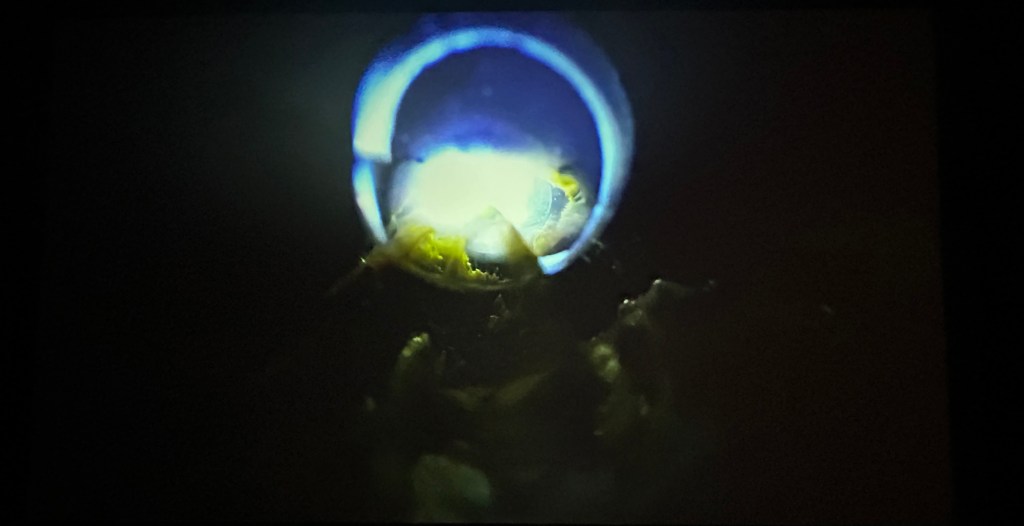
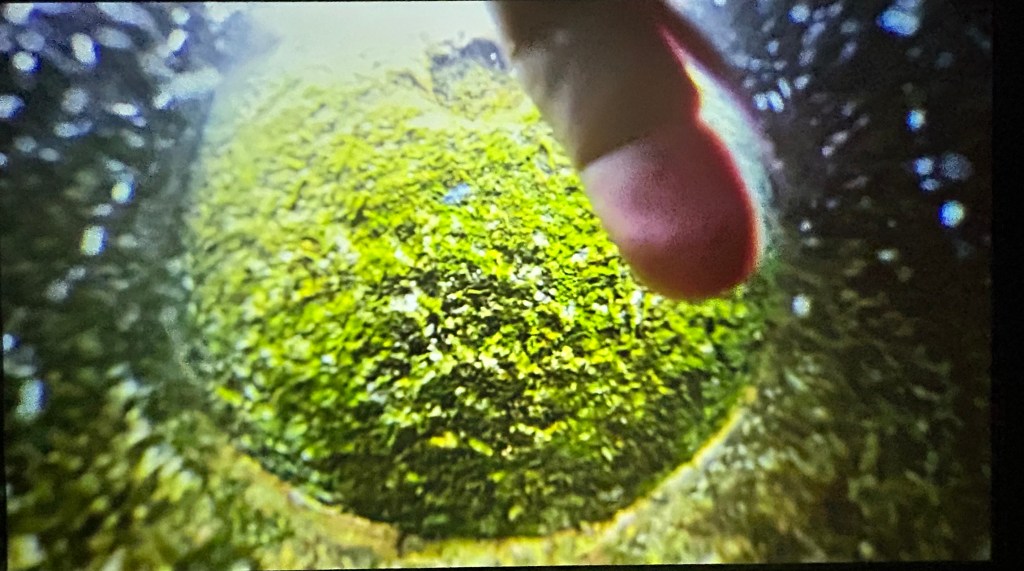
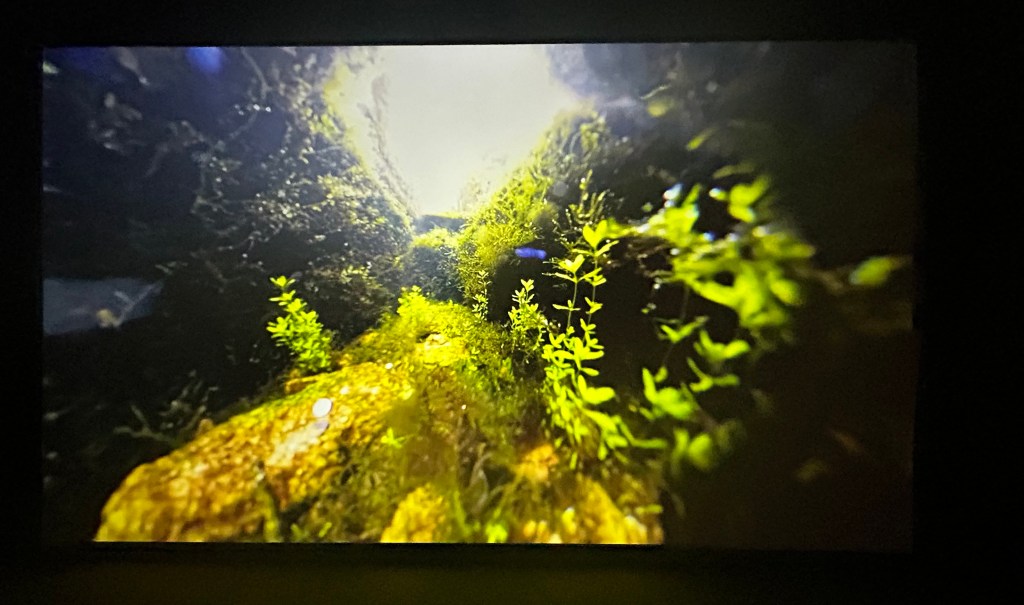
This process of moving in and out of the stone water basins repeats twelve times, as Oliver takes us into eleven healing fountains for women in Brittany, in northwestern France, and into the fountain at Lac Sainte-Anne (Wakamne or “God’s Lake” in Assiniboine and Manito Sahkahigan or “Spirit Lake” in Nehiyawewin), in the western prairie province of Alberta, Canada. At each fountain spring water trickles up from the earth and is directed by a carved stone channel or spout into a stone basin. Drinking from the basin, bathing, and wetting clothes promises to cure a specific ailment (the artist lists women who bark, fertility, lactation, breast cancer, children who could not walk after being swaddled too tightly by their mothers, love sickness and toothaches, whooping cough in children, and more). Les Trois Fontaines in Noyal-Pontivy are described by Oliver to have been formed “after Sainte-Noyale rejected and then was decapitated by the man her father wanted her to marry. Sainte-Noyale went in search of a burial place carrying her own head under her arm. Exhausted, she sat down and three drops of blood fell from her neck, which transformed into three fountains. The fountains promise to soothe headaches.”
The fountains are human-scale places of pilgrimage, prayer, healing, continuity. Pope Francis visited Lac Sainte-Anne on July 26, 2022, the feast day of Sainte-Anne. “He blessed the water,” Oliver writes, “and recognized the abuses experienced at residential school that resulted in cultural destruction, loss of life, and ongoing trauma lived by Indigenous peoples in every region of Canada.”
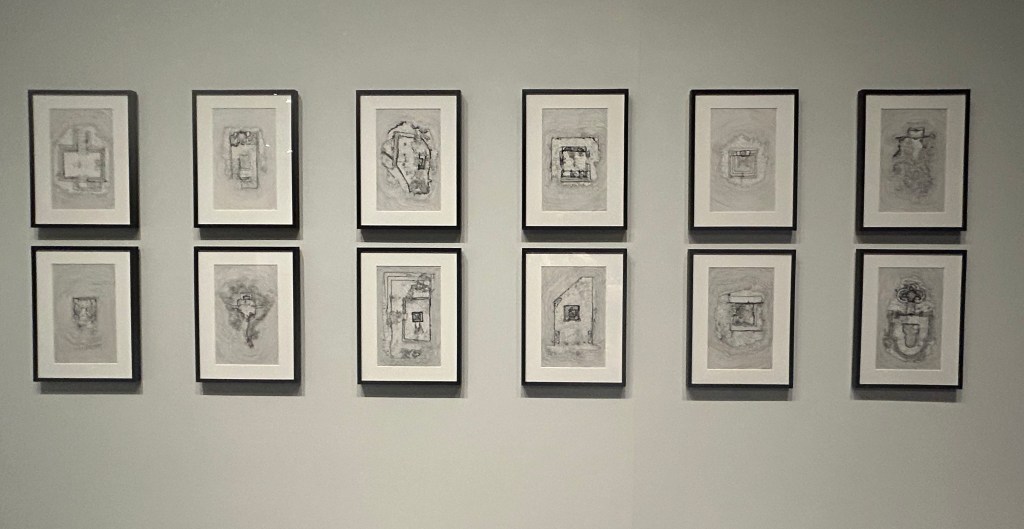
A pilgrim becomes a feature of the landscape through ritual circumambulation. Put differently, the wells are activated by circumambulating just as the pilgrim is activated by the wells. Human beings become wells. The fountains are on the move. Oliver captures that movement by drawing an even line in ink in a clockwise direction around printed three-dimensional scans of the fountains. The fountains are rendered as angles, splines, icosahedrons. Topographies of land and circumambulation merge in her hand-drawn contour lines.
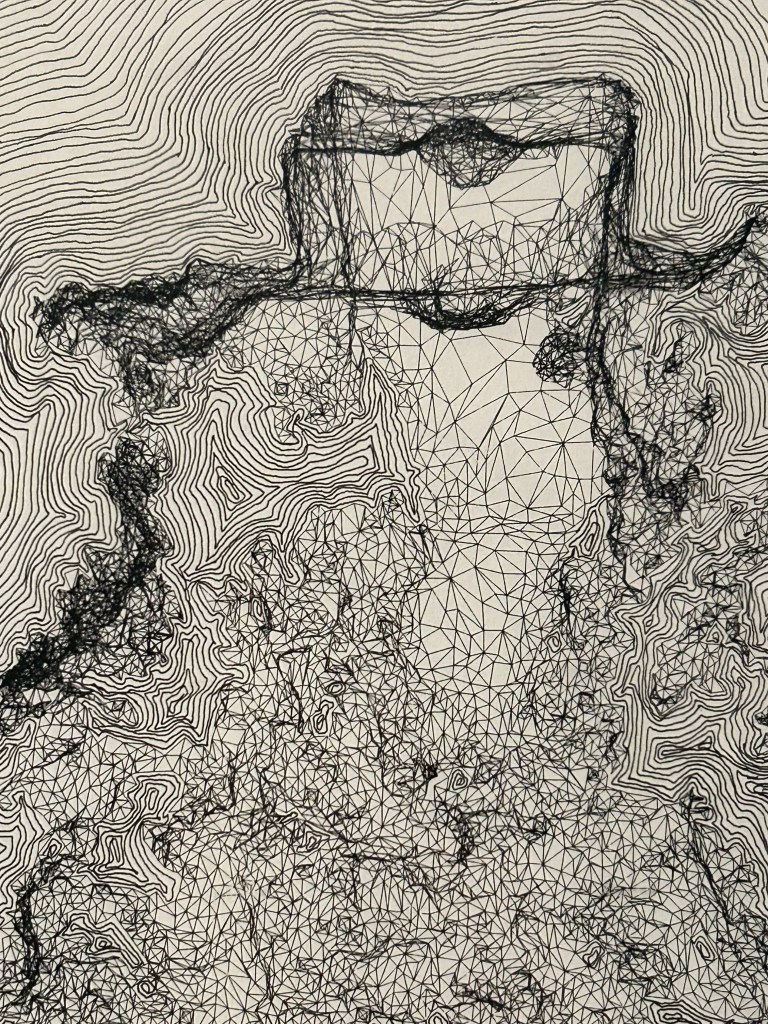
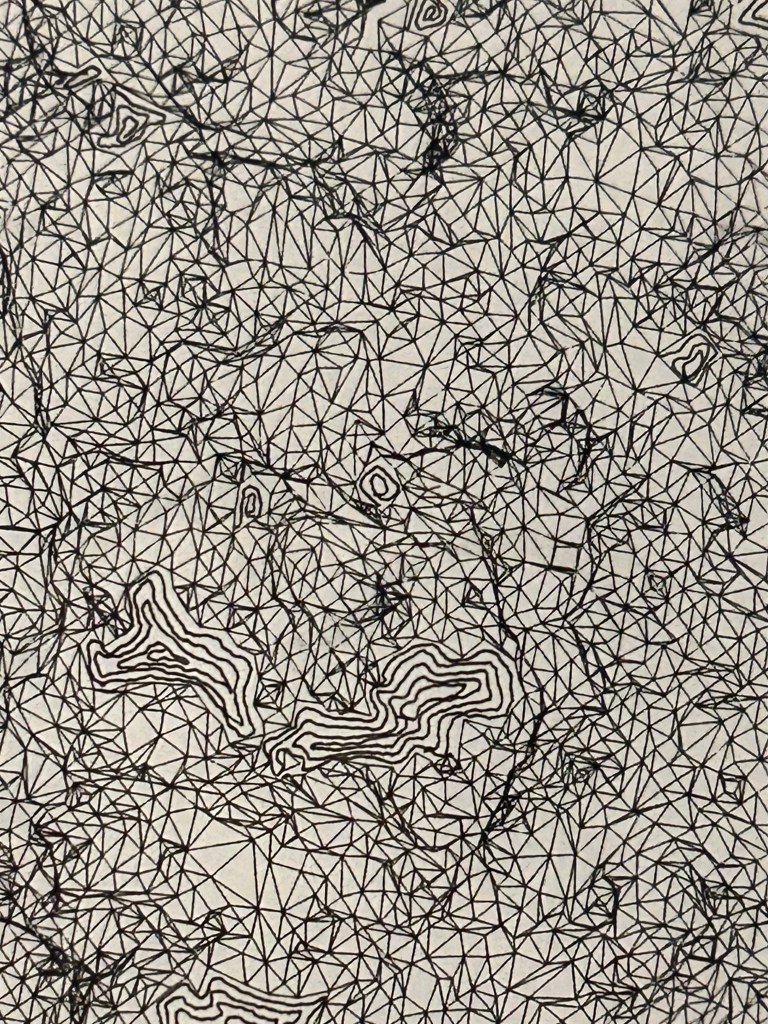
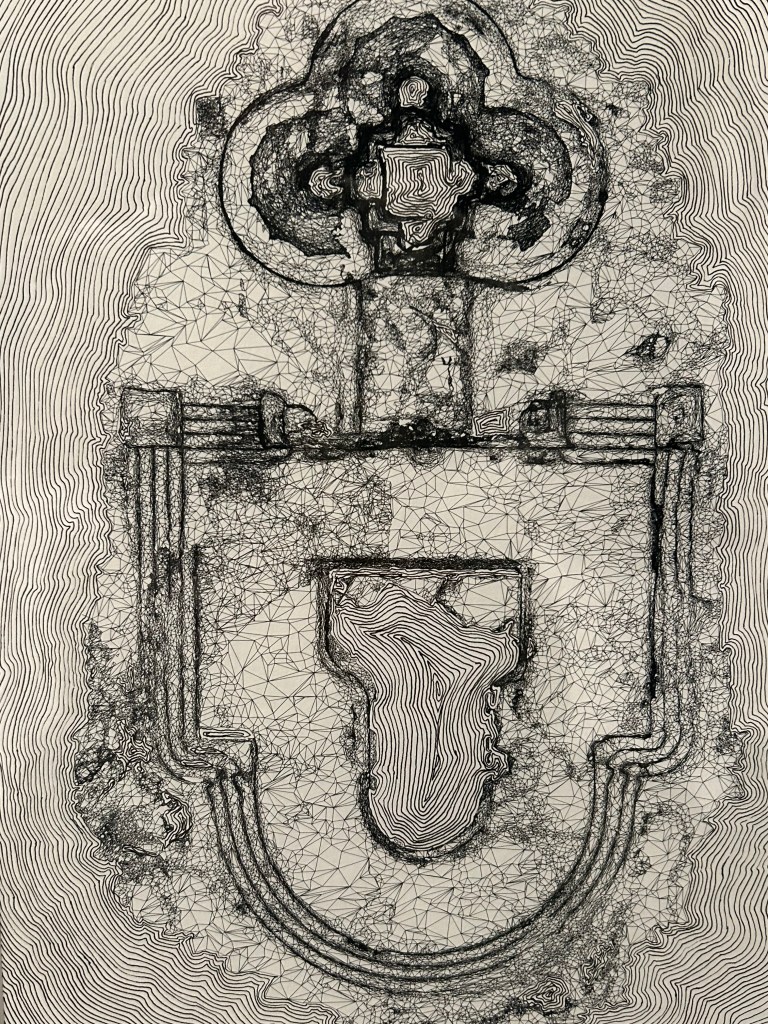
Oliver’s project asks us to protect and be aware of the sources of healing in ourselves and in the world. It raises critically important questions: What wells up in each of us? How does our planet offer healing to us in simple, gentle, and unadorned ways? How do we respond? And to return to the title of Oliver’s drawings, how can the data that marks our every lived moment become infused and immersed in healing magic?
Marilène Oliver, 12 Healing Fountains for Women. 2025. Video. 17:32 mins.
Marilène Oliver, Fountains of Data. Three-dimensional scans, ink drawings.
Top row, left to right: Fontaine de la Vierge, Bulat-Plestivien (2024); Fontaine Notre-Dame-du-Roncier, Josselin (2024); Fontaine Notre-Dame de Quelven, Guern (2025); Les Trois Fontaines, Noyal-Pontivy (2025); Fontaine Notre-Dame de Berven (2024); Fontaine Saint-Armel, Ploërmel (2025).
Bottom row, left to right: Fontaine Sainte-Radegonde (2025); La Fontaine Sainte-Brigitte, Landévant (2025); Fontaine de Sainte-Hélène (2025); Fontaine Saint-Anne, Dinan (2025); Fontaine Notre-Dame de Pendreo (2025); Fontaine Sainte-Anne D’Auray (2025).
On view in “Wayfinders: A Constellation of Women Artists”
Art Gallery of Alberta
January 24–May 31, 2026
 staring at the ceiling