Trees are on the move. They are migrating from the New England states towards Twin Falls, then moving north to where I am, in Edmonton. Here, their fates are equally uncertain. Climate heating has caused the wildfire season to lengthen, beginning earlier in the year, around May, and lasting later, till September. Trees around here also are vulnerable to death by bark beetles; shadow forests line the Trans-Canada highway from Alberta to British Columbia, silent monuments to the deadly insect infestation.
The artist Catherine Chalmers’ collaborators are trees. During the past five years she has been working side-by-side with trees in Idaho’s Sawtooth National Forest in the Rocky Mountains (the mountain range that extends north to Banff and Jasper in Alberta). There is an elegiac aura drifting across this body of work, conveyed by the trees that are there and not there, and by the artist’s hand.
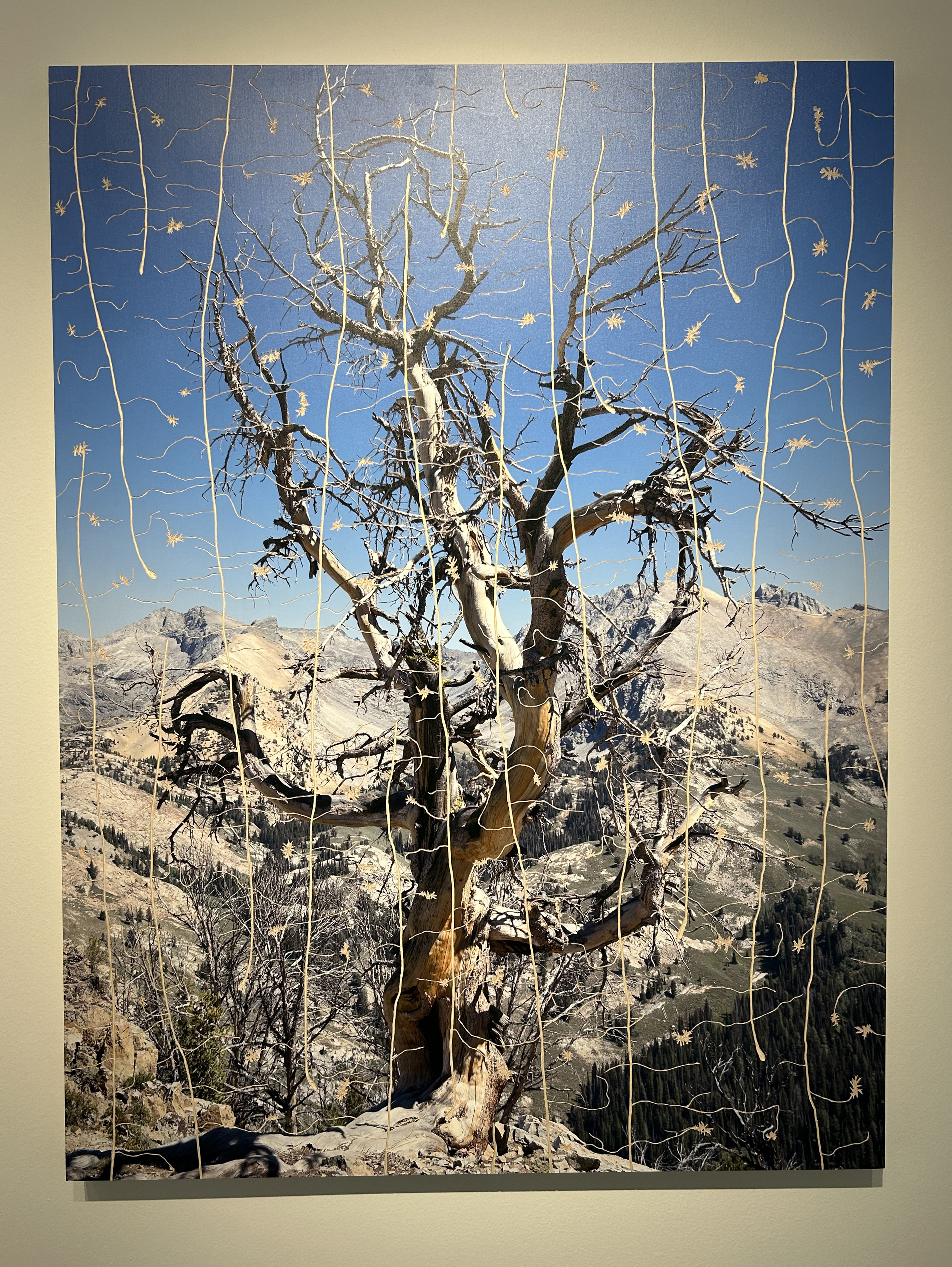

Take, for instance, an image of a limber pine, striated bare trunk and branches clawing at the 1960s-style postcard blue of the sky. The tree is dry and desiccated, almost like petrified wood but still standing and not quite as rock hard. Schist granite and shedded bark piles around the roots. In the distance are clusters of conifer trees. They stand together protectively. Over the photographic surface lines are carved out of the picture; carved so that it becomes clear that the photograph is printed on wood rather than paper. Those lines are more than aesthetic patterns. They mimic the channels carved by bark beetles into the tree’s living wood, much like neural networks ending in synapses. They join the eye and the hand of the artist to the dying wood of the tree. The tree enters the gallery in a multi-layered literal, bodily, and sculptural way.
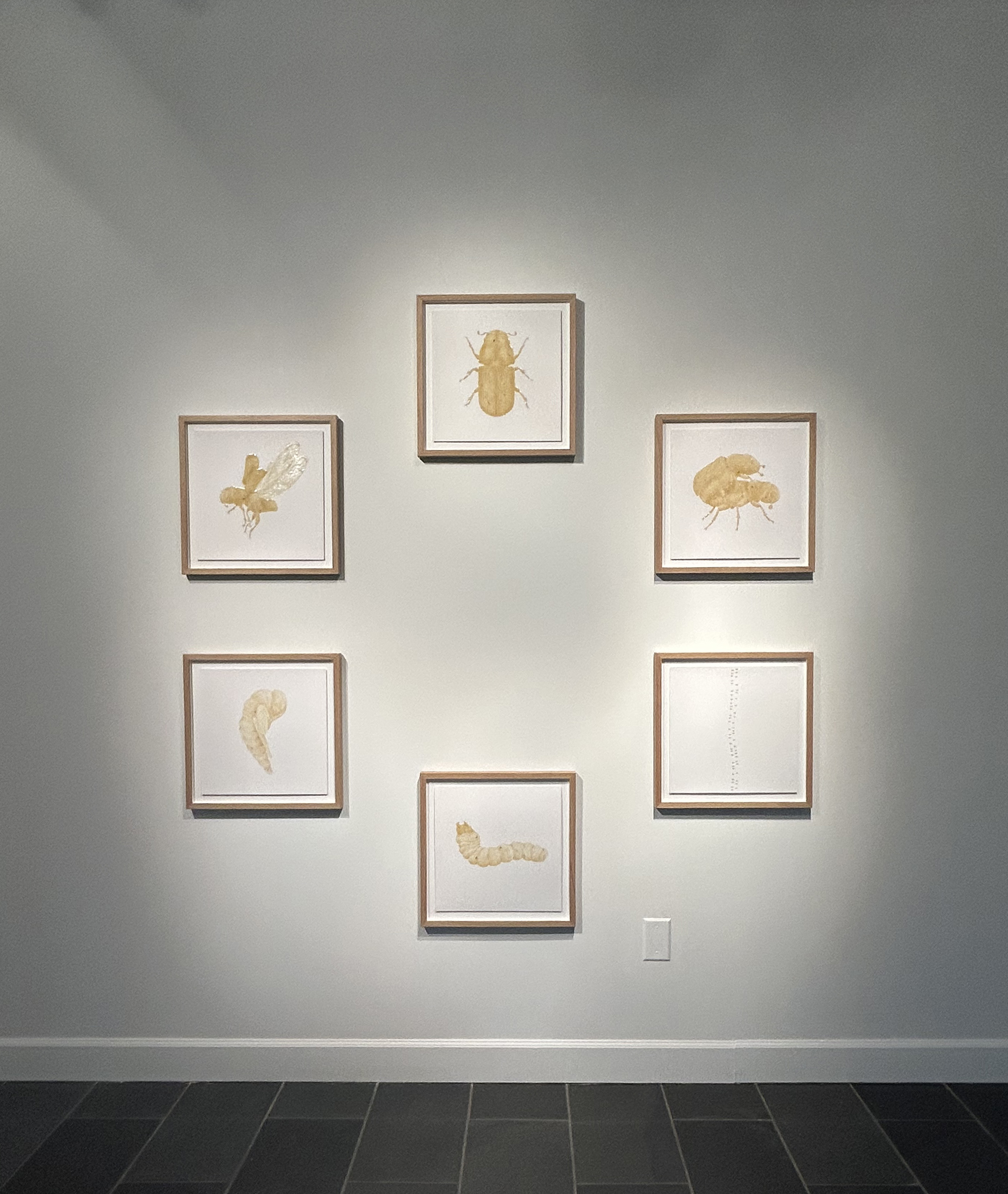


But there’s more to the tree’s presence. The resin that the beetles drain away from trees is used by the artist to represent the insect at different life stages. The insects are a buttery light caramel-colour. Real beetle bodies that look like pieces of dirt are embedded in the slickly pooling resin, tiny against the magnified representations of thoraxes, hardened elytra forewings, antennae, jointed legs, mandibles.
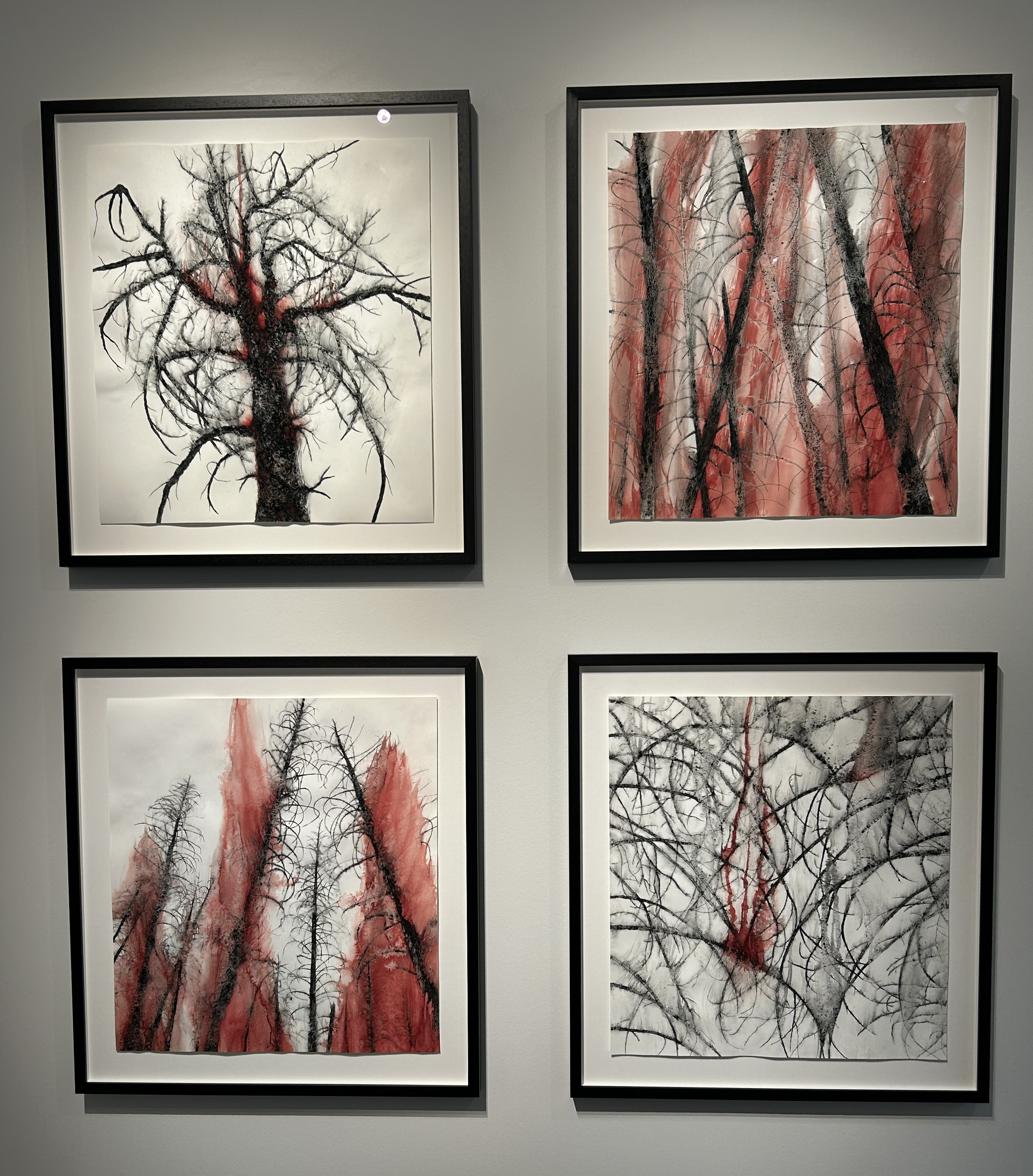
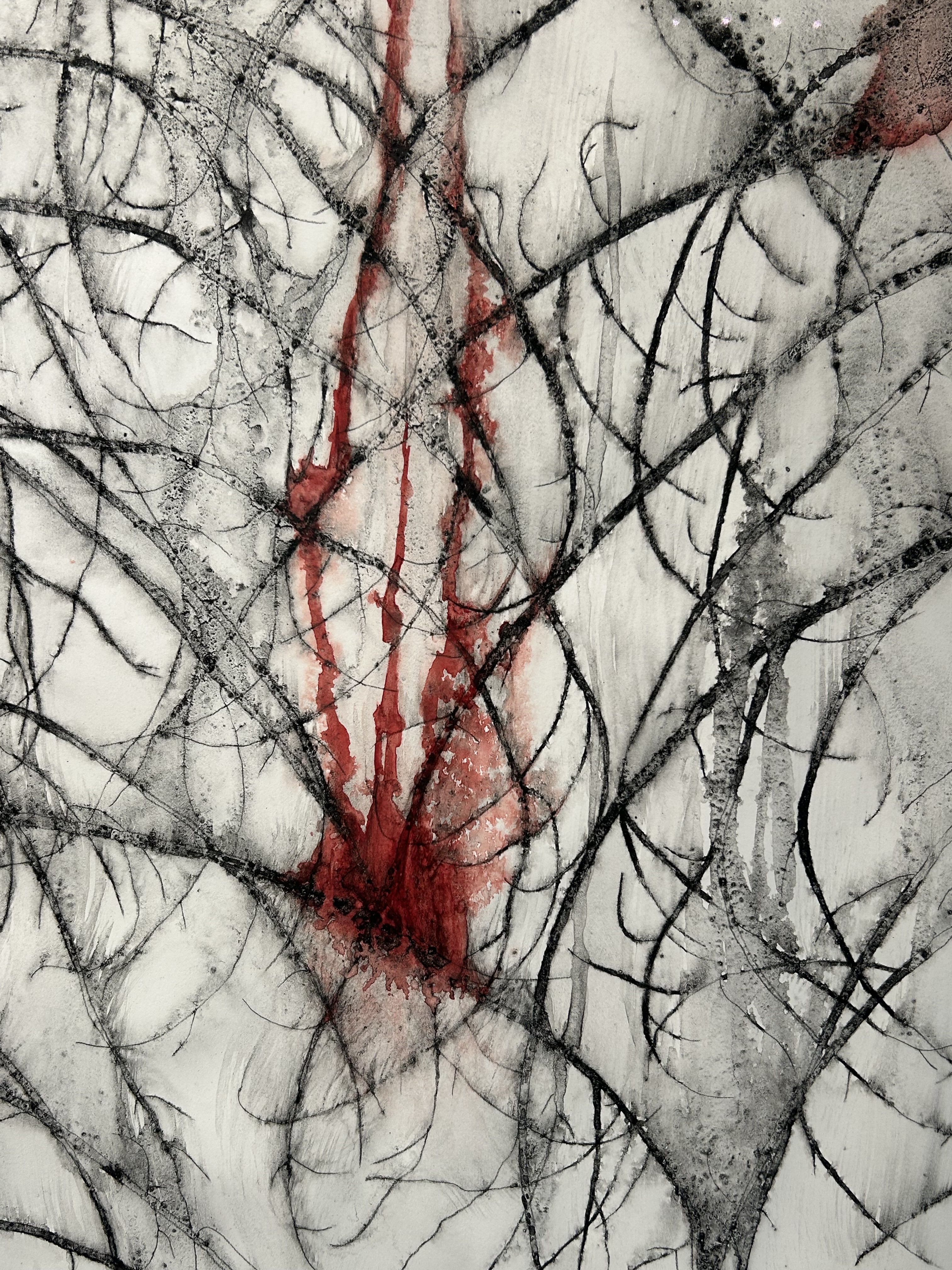
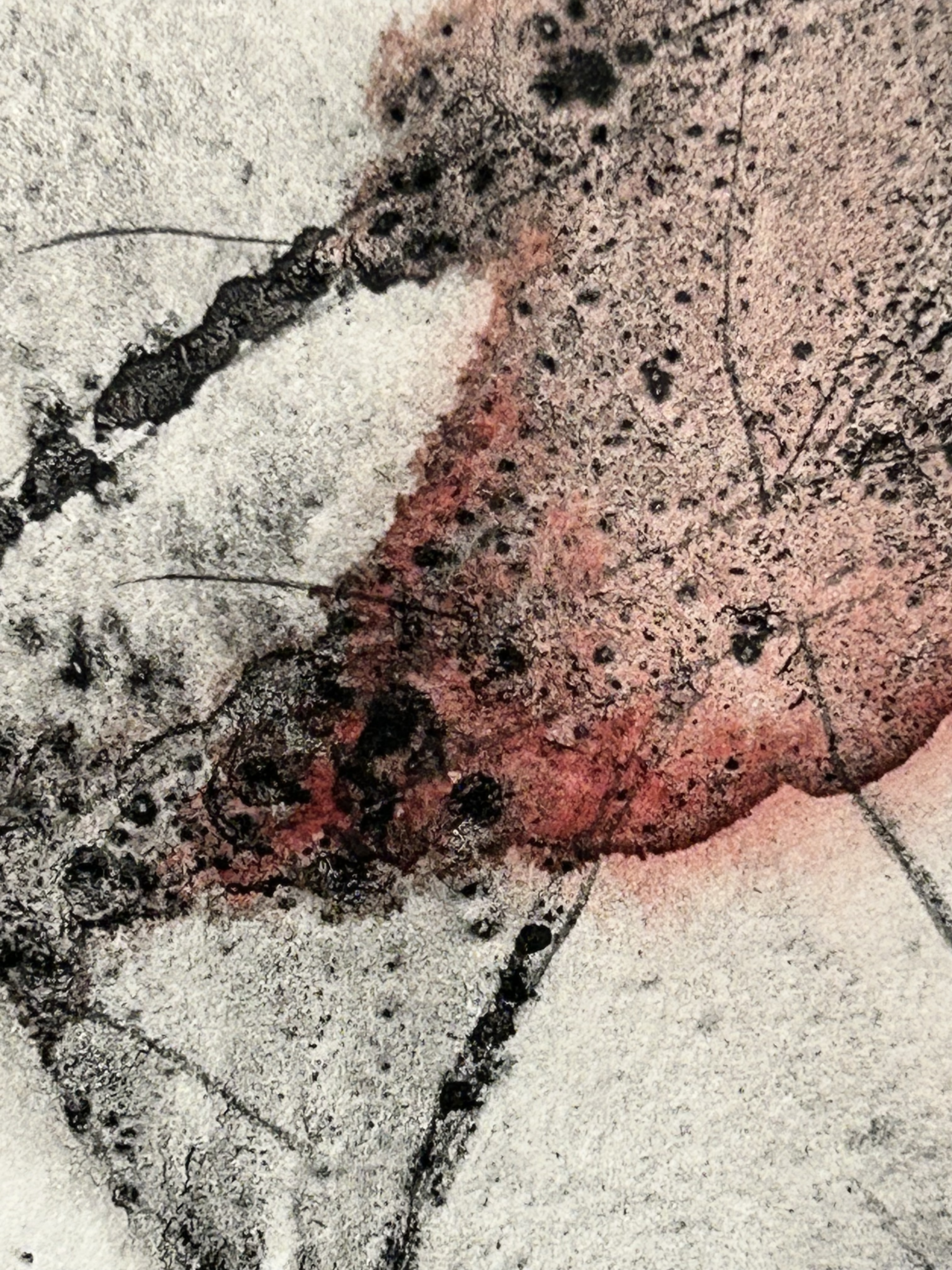
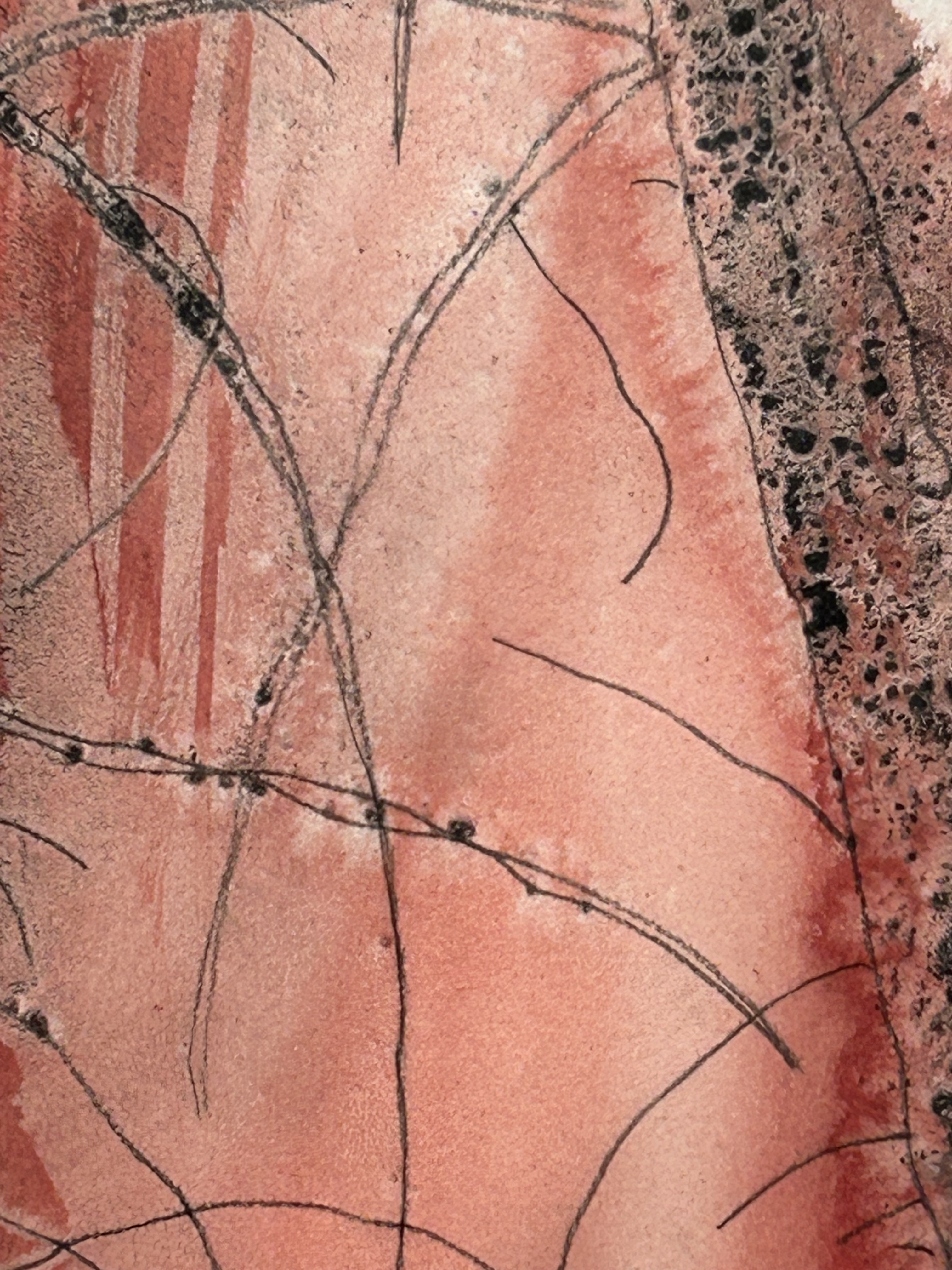
Four pictures capture the dying agency of the trees. They are drawn with charcoal (made of burnt wood) and watercolours on heavy white paper (more wood). These are the strongest pieces in the show. They look something like grave rubbings, but here the rubbings are cellular imprints of leaf or bark. Washy red flames soar through the crisscrossing charcoal lines of the tree trunks and branches. The fire looks like blood.
Chalmers is connected in an intimate way to the trees. Through her artworks the trees encircle us as well, not in a way that is “matter of fact and wildly imaginative,” as the curator avers, but in an authentically poetic way that respects and echoes the poetic agency of the trees. What we encounter in the gallery are the trees themselves lamenting their ending, and the artist joining them––and allowing beholders to join them––in that extended moment of sadness.
Limber Pine/Mountain Pine Beetle, 2025. UV print on wood panel, hand-carved; 40 x 30 x 1.5 in.
Mountain Pine Beetle Lifecycle series, 2025. Tree resin on paper; 16 x 16 in.
Beaver Creek Fire 2013 from the Fire Watercolours series, 2025. Charcoal and watercolour on paper; 24 x 22 in.
Ross Fork Fire 2022 from the Fire Watercolours series, 2025. Charcoal and watercolour on paper; 24 x 22 in.
Institute for the Humanities Gallery
University of Michigan
September 11–October 24, 2025
Please visit the artist’s website.
 staring at the ceiling